⏰LIMITED TIME:
FREE EU SHIPPING — NO MINIMUM ORDER
🚚⏰LIMITED TIME:
FREE EU SHIPPING — NO MINIMUM ORDER
🚚⏰LIMITED TIME:
FREE EU SHIPPING — NO MINIMUM ORDER
🚚
⏰LIMITED TIME:
FREE EU SHIPPING — NO MINIMUM ORDER
🚚⏰LIMITED TIME:
FREE EU SHIPPING — NO MINIMUM ORDER
🚚⏰LIMITED TIME:
FREE EU SHIPPING — NO MINIMUM ORDER
🚚
⏰LIMITED TIME:
FREE EU SHIPPING — NO MINIMUM ORDER
🚚⏰LIMITED TIME:
FREE EU SHIPPING — NO MINIMUM ORDER
🚚⏰LIMITED TIME:
FREE EU SHIPPING — NO MINIMUM ORDER
🚚
⏰LIMITED TIME:
FREE EU SHIPPING — NO MINIMUM ORDER
🚚⏰LIMITED TIME:
FREE EU SHIPPING — NO MINIMUM ORDER
🚚⏰LIMITED TIME:
FREE EU SHIPPING — NO MINIMUM ORDER
🚚
Choosing between 10 µL pipette tips and 1 mL pipette tips starts with the volume range of the pipette and the liquid-handling task. A 10 µL tip is designed for low-volume work, while a 1 mL tip—also called a 1000 µL tip—supports larger transfers. The correct choice should fit the pipette securely, cover the required working volume and match the contamination-control needs of the workflow.
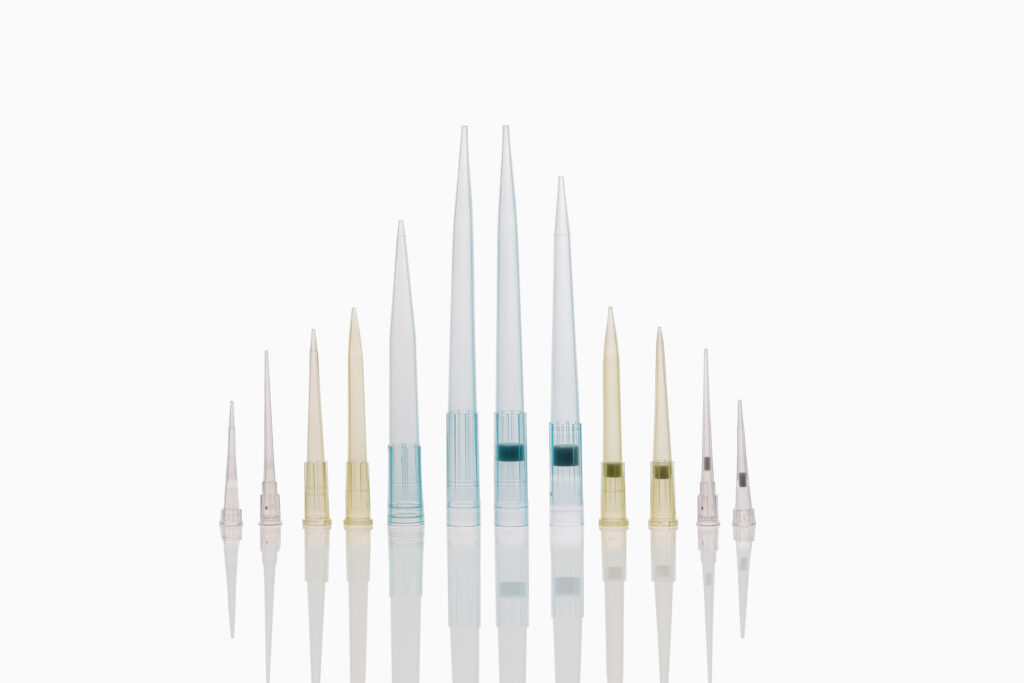
Pipette tips are available in different capacities, lengths, packaging formats and filter options.
10 µL vs. 1 mL pipette tips at a glance
Selection point
10 µL tips
1 mL / 1000 µL tips
Typical role
Low-volume liquid handling
Larger-volume transfers
Common applications
PCR setup, assays and small-volume reagent handling
Sample preparation, buffer transfer and routine laboratory work
Length options
Standard or extra-long
Standard or extra-long
Filter option
Useful for contamination-sensitive work
Useful when aerosol protection is required
Packaging
Racked, stacked refill or bulk
Racked, stacked refill or bulk
When to choose 10 µL pipette tips
Choose 10 µL tips when the pipette’s operating range and protocol involve small liquid volumes. They are commonly used for PCR reagents, master mixes, enzymes and other workflows where sample conservation matters. For narrow vessels or the bottom of microtubes, an extra-long format can improve reach while reducing contact between the pipette shaft and the vessel wall.
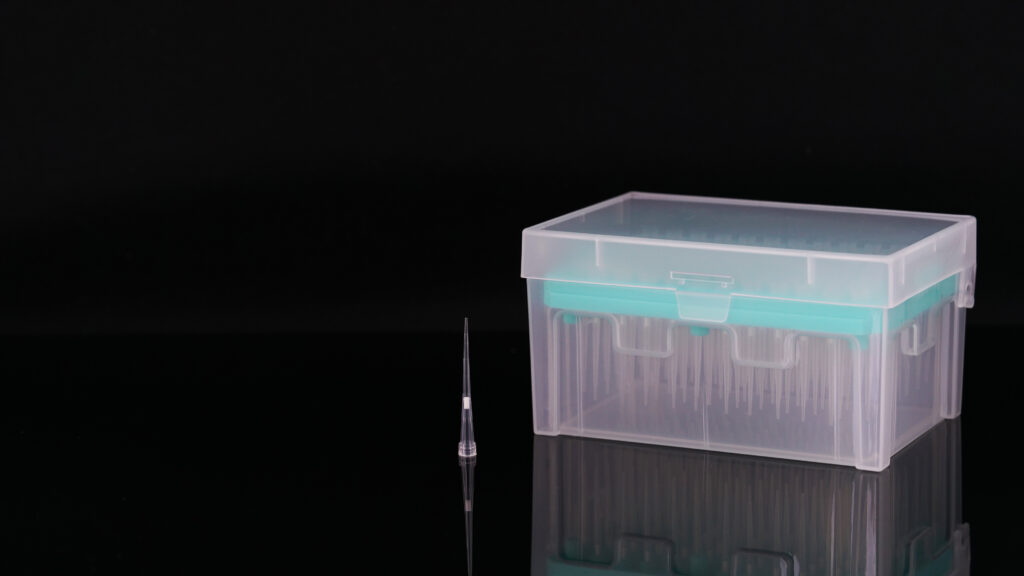
Racked 10 µL extra-long filter tips for low-volume, contamination-sensitive workflows.
Filter tips add a physical barrier between the sample and pipette interior. They are particularly relevant for PCR, nucleic-acid handling and samples where aerosol carryover could affect results. Sterility and filtration are separate attributes, so confirm both when the protocol requires them. NEST offers sterile racked pipette tips for laboratories that prefer ready-to-use racks.
When to choose 1 mL pipette tips
A 1 mL tip and a 1000 µL tip describe the same nominal capacity. This size is suitable for pipettes used in larger-volume transfers, including buffers, media components and routine sample preparation. Extra-long 1000 µL tips can help reach into deeper tubes and vessels without bringing the pipette body as close to the opening.
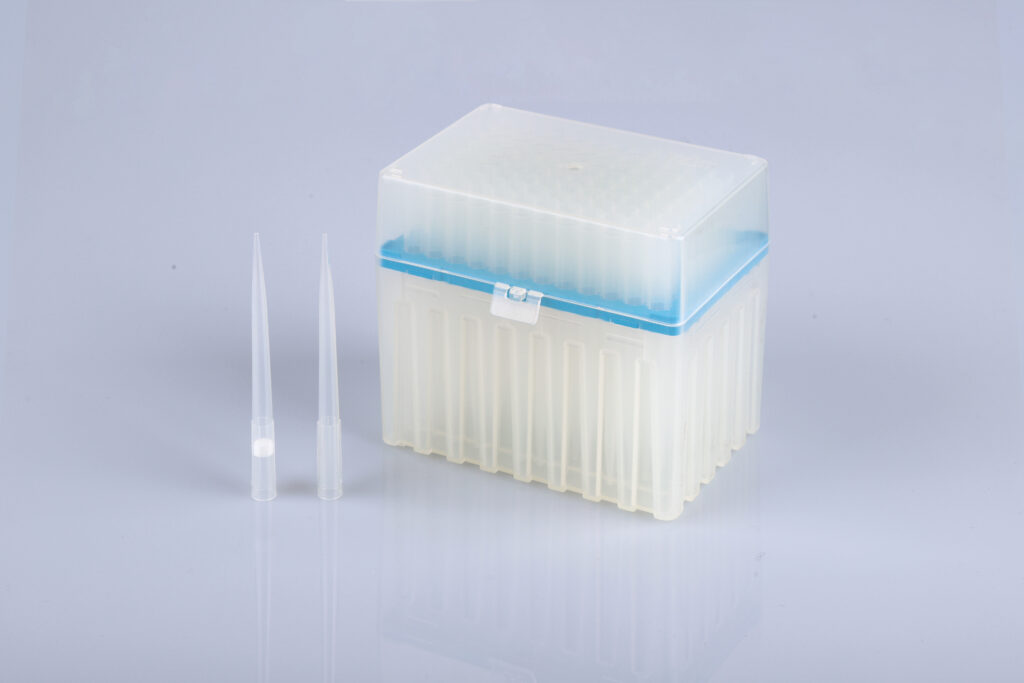
1000 µL extra-long pipette tips are designed for larger-volume transfers and deeper vessels.
Do not select a tip only by the volume printed on the package. A secure fit, smooth loading and reliable ejection are also important. Verify compatibility with the pipette model before routine use, especially when changing brands or moving from a standard to an extra-long format.
Choose the right packaging and protection level
Racked, sterile tips: convenient for clean workflows and repeated bench use.
Stacked rack refills: reduce the need to replace the outer box while keeping tips organized.
Bulk, non-sterile tips: practical for laboratories that refill racks or use tips in general workflows.
Low-binding tips: worth considering when handling proteins, nucleic acids or other samples prone to surface adsorption.
Choose 10 µL or 1 mL tips according to the transfer volume.
Check fit and compatibility with the pipette model.
Select standard or extra-long length for the vessel.
Decide whether the workflow requires a filter, sterility or low-binding surface.
Choose racked, stacked refill or bulk packaging based on use frequency.
Frequently asked questions
Are 1 mL and 1000 µL pipette tips the same?
Yes. One millilitre equals 1000 microlitres, so these terms normally describe the same nominal tip capacity. Always confirm compatibility with the specific pipette.
Can I use a 1000 µL tip for a 10 µL transfer?
It is better to use a pipette and tip designed for the target volume. Working near the lower limit of a large-volume system can make precise handling more difficult than using an appropriately sized low-volume pipette and tip.
Do all 10 µL tips fit every pipette?
No. Tips described as universal may fit many major pipette models, but fit should still be verified. A poor seal can affect aspiration, dispensing and tip retention.
When should I choose filter pipette tips?
Filter tips are useful for contamination-sensitive applications, including PCR and nucleic-acid work, and when aerosols could enter the pipette. They do not replace appropriate laboratory technique or pipette maintenance.
Are extra-long tips always better?
No. Extra-long tips are valuable for deep vessels or when more clearance is needed, but standard-length tips may be more convenient for routine transfers. Choose based on vessel geometry and the working environment.
Find the right pipette tip format
NEST supplies pipette tips across multiple volumes, lengths, filter options and packaging formats. Review the linked product options or contact us for help matching a tip format to your purchasing and workflow requirements.
Cookies are small text files that can be used by websites to make a user's experience more efficient. The law states that we can store cookies on your device if they are strictly necessary for the operation of this site. For all other types of cookies we need your permission. This site uses different types of cookies. Some cookies are placed by third party services that appear on our pages.
Necessary cookies help make a website usable by enabling basic functions like page navigation and access to secure areas of the website. The website cannot function properly without these cookies.
Marketing cookies are used to track visitors across websites. The intention is to display ads that are relevant and engaging for the individual user and thereby more valuable for publishers and third party advertisers.
Preference cookies enable a website to remember information that changes the way the website behaves or looks, like your preferred language or the region that you are in.