⏰LIMITED TIME:
FREE EU SHIPPING — NO MINIMUM ORDER
🚚⏰LIMITED TIME:
FREE EU SHIPPING — NO MINIMUM ORDER
🚚⏰LIMITED TIME:
FREE EU SHIPPING — NO MINIMUM ORDER
🚚
⏰LIMITED TIME:
FREE EU SHIPPING — NO MINIMUM ORDER
🚚⏰LIMITED TIME:
FREE EU SHIPPING — NO MINIMUM ORDER
🚚⏰LIMITED TIME:
FREE EU SHIPPING — NO MINIMUM ORDER
🚚
⏰LIMITED TIME:
FREE EU SHIPPING — NO MINIMUM ORDER
🚚⏰LIMITED TIME:
FREE EU SHIPPING — NO MINIMUM ORDER
🚚⏰LIMITED TIME:
FREE EU SHIPPING — NO MINIMUM ORDER
🚚
⏰LIMITED TIME:
FREE EU SHIPPING — NO MINIMUM ORDER
🚚⏰LIMITED TIME:
FREE EU SHIPPING — NO MINIMUM ORDER
🚚⏰LIMITED TIME:
FREE EU SHIPPING — NO MINIMUM ORDER
🚚
Sterile Serological Pipettes: Sizes, Packaging and Buying Guide
Compare sterile serological pipette sizes, individual packaging and purchasing criteria for cell culture and routine liquid transfer. Explore NEST options from 1 to 50 mL.
Sterile serological pipettes are a practical choice for cell-culture work, media preparation and other workflows that require clean, controlled liquid transfer. The purchasing decision is not only about volume. Packaging, readability, workflow fit and the quantity used per session all affect convenience and waste.
This guide explains how to compare sterile pipettes from 1 mL to 50 mL and how to select an individually wrapped format for routine laboratory use. For operating technique, see our serological pipette handling guide.
Why sterility and packaging matter
A serological pipette normally contacts the liquid being transferred, so packaging should support the cleanliness requirements of the workflow. Individually wrapped pipettes are useful when laboratories open only the quantity needed for a task. The remaining pipettes stay enclosed until use, which can simplify storage and reduce unnecessary exposure.
Paper-plastic wrapping also lets users view the pipette before opening it. During receiving and storage, check that every wrapper is intact, dry and free from punctures. Do not use a pipette if the package has been damaged or previously opened.
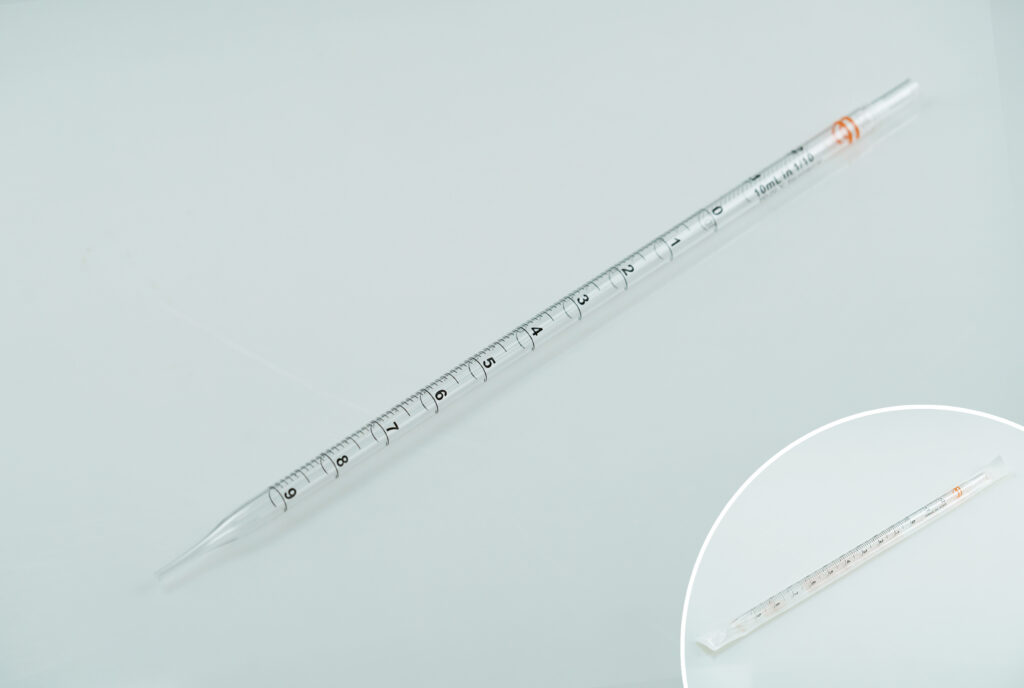
A 10 mL serological pipette in individual paper-plastic packaging.
Choose the right serological pipette size
Select the smallest capacity that comfortably covers the intended transfer. A closer match between pipette size and working volume generally makes the graduation scale easier to use and helps avoid relying on a large pipette for a very small transfer.
Volume range
Typical purchasing use case
Selection note
1–2 mL
Small-volume additions and sampling
Useful when a larger pipette would make the target volume difficult to read
5–10 mL
Routine media, buffer and reagent transfer
A versatile range for everyday laboratory work
25–50 mL
Larger-volume preparation and vessel-to-vessel transfer
Reduces repeated aspiration when the workflow uses more liquid
NEST individually paper-plastic wrapped serological pipettes are available in 1, 2, 5, 10, 25 and 50 mL sizes. If a protocol routinely uses several volumes, standardizing a core set of sizes can simplify inventory while keeping the necessary flexibility.
What buyers should compare
Required volume range: map common transfers before choosing sizes.
Graduation visibility: confirm that markings are easy to read under normal bench lighting.
Packaging format: choose individual wrapping when pipettes are opened gradually rather than all at once.
Storage space: estimate monthly use and available cabinet space before ordering.
Receiving condition: inspect cartons and individual wrappers when the shipment arrives.
Workflow compatibility: confirm that the pipette format works with the pipette controller used in the laboratory.
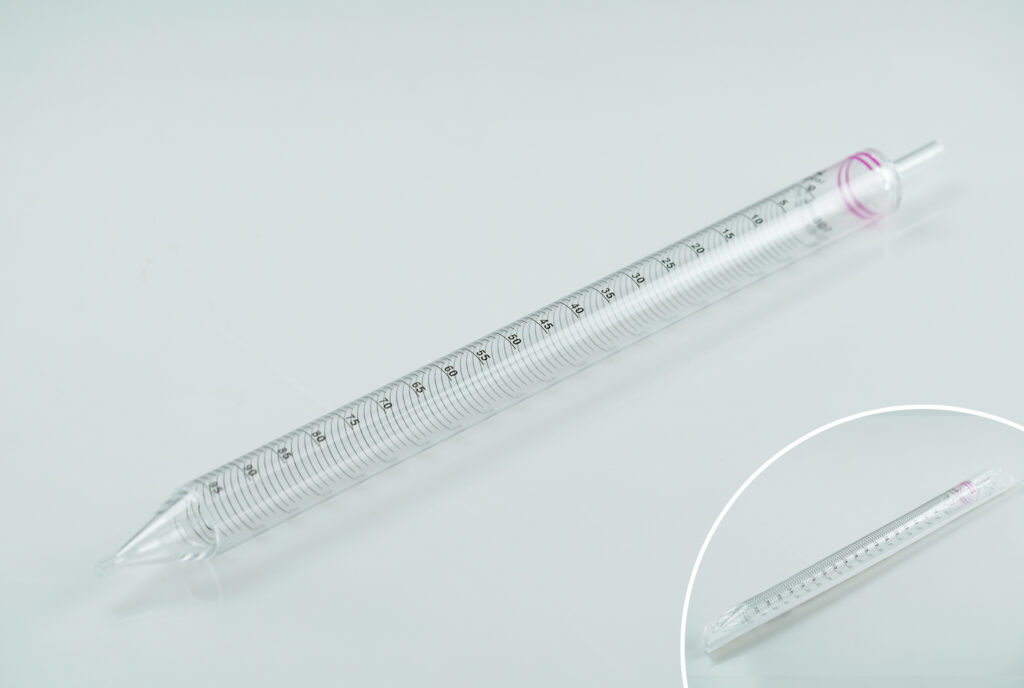
A 50 mL option for workflows that require larger liquid transfers.
Build a more efficient purchasing plan
Begin with actual transfer logs rather than ordering every available size in equal quantities. High-use 5 mL and 10 mL pipettes may need frequent replenishment, while 25 mL and 50 mL formats may be reserved for media preparation or larger batches. Review consumption after the first ordering cycle and adjust case quantities to reduce both shortages and excess stock.
For shared laboratories, label storage areas by volume and use first-in, first-out stock rotation. Keeping unopened cartons away from moisture and separating damaged packages during receiving also supports more consistent day-to-day use.
What sizes of sterile serological pipettes are available?
NEST offers individually paper-plastic wrapped serological pipettes in 1, 2, 5, 10, 25 and 50 mL sizes. Choose a size close to the usual transfer volume rather than using one large pipette for every task.
Are serological pipettes reusable?
Individually wrapped plastic serological pipettes are intended as single-use consumables. Reusing them can introduce contamination and may affect transfer performance.
Individual wrapping allows laboratories to open only the number needed for a procedure while keeping unused pipettes enclosed. It is helpful for workflows that use pipettes intermittently or across several work areas.
How should packaged pipettes be checked before use?
Inspect the wrapper for tears, punctures, moisture or an open seal. If the package is compromised, set the pipette aside and follow the laboratory’s handling procedure.
Which size is best for routine cell-culture media transfer?
The best size depends on the vessel and target volume. Five and 10 mL formats suit many routine transfers, while 25 and 50 mL pipettes can reduce repeated aspiration during larger-volume preparation.
Cookies are small text files that can be used by websites to make a user's experience more efficient. The law states that we can store cookies on your device if they are strictly necessary for the operation of this site. For all other types of cookies we need your permission. This site uses different types of cookies. Some cookies are placed by third party services that appear on our pages.
Necessary cookies help make a website usable by enabling basic functions like page navigation and access to secure areas of the website. The website cannot function properly without these cookies.
Marketing cookies are used to track visitors across websites. The intention is to display ads that are relevant and engaging for the individual user and thereby more valuable for publishers and third party advertisers.
Preference cookies enable a website to remember information that changes the way the website behaves or looks, like your preferred language or the region that you are in.