⏰LIMITED TIME:
FREE EU SHIPPING — NO MINIMUM ORDER
🚚⏰LIMITED TIME:
FREE EU SHIPPING — NO MINIMUM ORDER
🚚⏰LIMITED TIME:
FREE EU SHIPPING — NO MINIMUM ORDER
🚚
⏰LIMITED TIME:
FREE EU SHIPPING — NO MINIMUM ORDER
🚚⏰LIMITED TIME:
FREE EU SHIPPING — NO MINIMUM ORDER
🚚⏰LIMITED TIME:
FREE EU SHIPPING — NO MINIMUM ORDER
🚚
⏰LIMITED TIME:
FREE EU SHIPPING — NO MINIMUM ORDER
🚚⏰LIMITED TIME:
FREE EU SHIPPING — NO MINIMUM ORDER
🚚⏰LIMITED TIME:
FREE EU SHIPPING — NO MINIMUM ORDER
🚚
⏰LIMITED TIME:
FREE EU SHIPPING — NO MINIMUM ORDER
🚚⏰LIMITED TIME:
FREE EU SHIPPING — NO MINIMUM ORDER
🚚⏰LIMITED TIME:
FREE EU SHIPPING — NO MINIMUM ORDER
🚚
Bottle-top filters provide a convenient way to clarify or sterilize laboratory solutions by vacuum filtration. Because the filter unit connects directly to a receiving bottle, the workflow can reduce transfers and simplify handling. However, choosing the right system requires more than selecting a bottle size. Buyers should consider the liquid, batch volume, sterility needs, connection layout and supply format before ordering.
What Is a Bottle-Top Filter?
A bottle-top filter is a filtration assembly designed to work with vacuum. Liquid is added to the upper reservoir, pulled through a membrane and collected in the receiver below. Some products are supplied as complete systems with a receiver bottle, while others are filter units intended for a compatible laboratory bottle.
This format is widely used for cell-culture media and other laboratory solutions because it combines filtration and collection in one setup. A complete, ready-to-use system can also reduce the number of separate components that purchasing teams must source and verify.
When a Complete Vacuum Filtration System Makes Sense
A complete system is useful when consistency and straightforward setup matter. The filter, connector and receiver are designed to function together, which helps laboratories avoid uncertainty about component fit. It may also be practical for teams that process recurring batches and want a predictable consumable format.
For occasional filtration or specialized bottle configurations, a standalone bottle-top unit may be appropriate. For routine workflows, compare the full system rather than only the filter price: receiving capacity, handling steps, packaging and availability all affect the real cost of use.
Five Factors to Check Before Buying
1. Working volume and throughput
Choose capacity according to the volume normally processed in one batch, not simply the largest option available. Smaller systems can be easier to handle for limited volumes, while larger systems reduce repeated setups when processing more solution. Allow sufficient headroom and follow the stated operating instructions for the selected product.
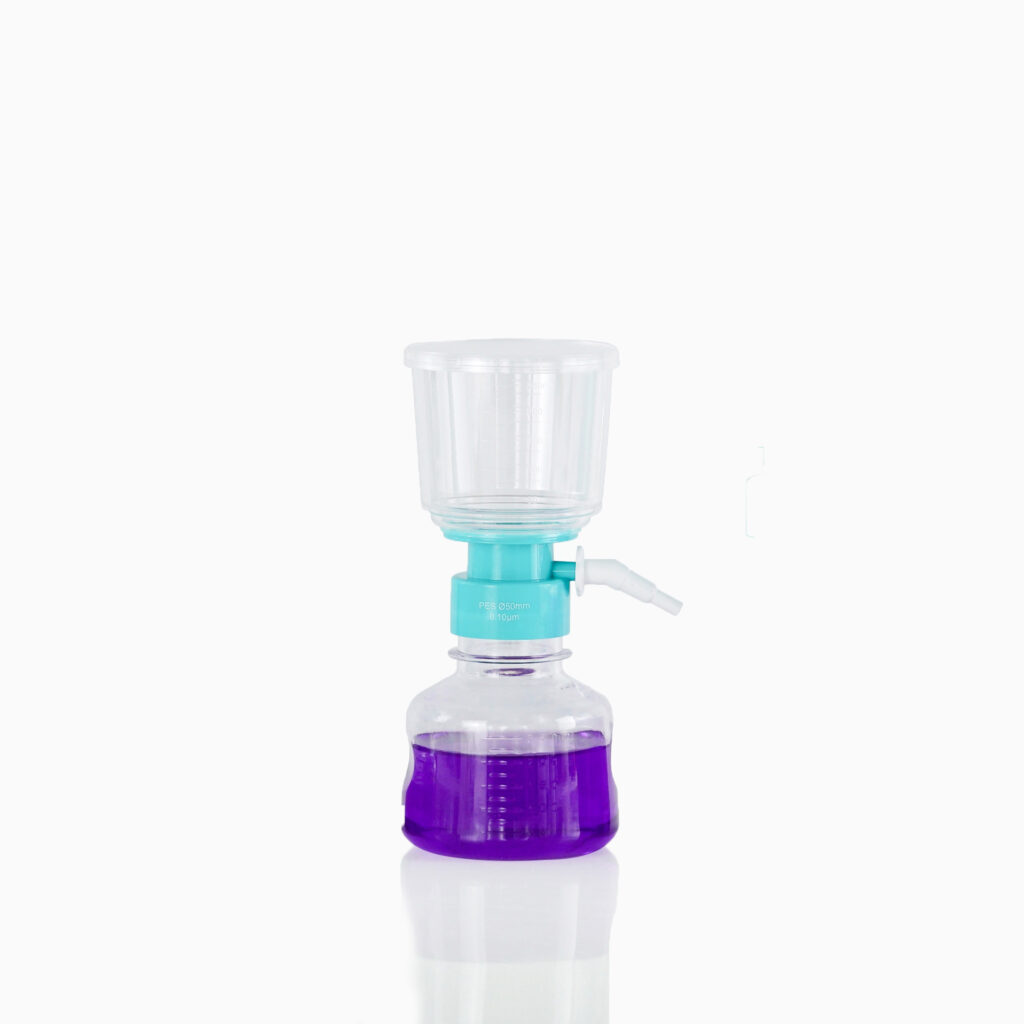
A 250 mL bottle-top vacuum filtration system for smaller laboratory batches.
2. Membrane compatibility
The membrane must be suitable for the solution and the intended filtration objective. Review the product specification for membrane material, pore size and chemical compatibility. If a formulation contains solvents, proteins or additives, confirm suitability with the supplier rather than assuming that every membrane behaves the same way.
3. Sterility and workflow protection
For contamination-sensitive work, verify whether the product is supplied sterile and how it is packaged. Inspect packaging before use and consider how the unit will be opened, connected and handled in the laboratory. A sterile product cannot compensate for poor aseptic technique after opening.
4. Receiver and connection design
Check that the receiver capacity matches the batch and that the vacuum connection fits the laboratory setup. A stable bottle, accessible port and clear graduations can make routine handling easier. Also confirm whether the receiver will be used only for collection or for short-term storage after filtration.
5. Packaging, documentation and supply
Purchasing decisions should include pack size, storage space, lot traceability and expected consumption. Ask for the current product documentation needed by your organization. For recurring work, confirm stock availability and lead time before standardizing a filtration system.
How to Match Capacity to the Workflow
Smaller batches: select a compact capacity that limits unnecessary hold-up and is easy to handle.
Routine medium batches: choose a size that covers the normal working volume without repeated transfers.
Larger batches: a higher-capacity system may reduce the number of filtration cycles, provided the setup and receiver remain practical for the operator.
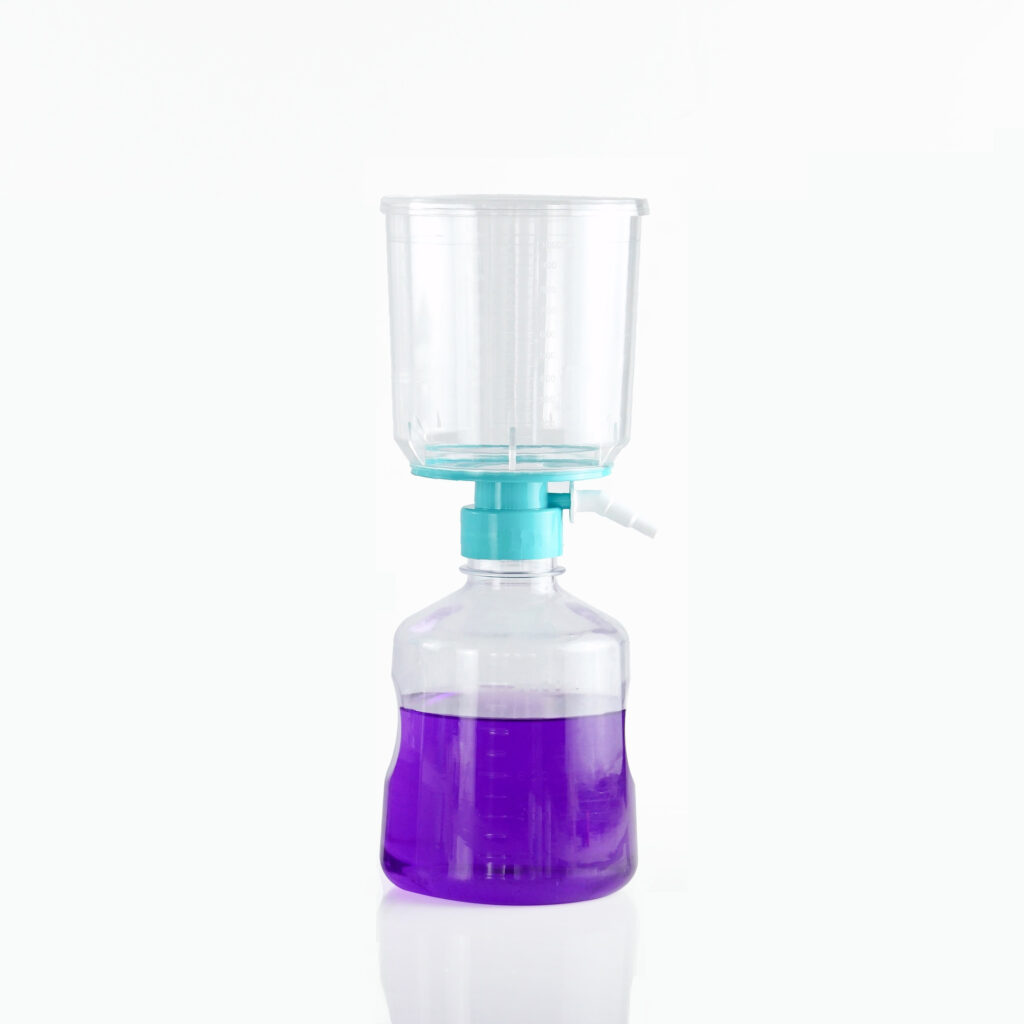
A 1000 mL system can support larger-volume laboratory filtration workflows.
A Practical Procurement Checklist
What liquid and batch volume will be filtered?
What membrane material and pore size does the method require?
Must the product be supplied sterile?
Is a complete receiver system preferred?
Does the vacuum connection suit the existing setup?
What pack size, documentation and lead time are required?
Consider NEST Bottle-Top Vacuum Filtration Systems
NEST offers sterile vacuum filtration systems for efficient filtration of cell-culture media and laboratory solutions. Ready-to-use configurations and multiple capacities help laboratories select a format aligned with their routine volume and purchasing needs. Review the available options on the NEST Vacuum Filtration System product page.
Need help comparing capacities or confirming a product for your workflow? Contact NEST with your solution type, working volume and purchasing requirements.
Frequently Asked Questions
What is the difference between a bottle-top filter and a complete vacuum filtration system?
A bottle-top filter may refer to the filtration unit that connects to a compatible bottle. A complete system includes the filtration assembly and a receiver designed to work together. Always check the exact product configuration before ordering.
Which bottle-top filter size should I choose?
Select a capacity close to the volume normally processed in one batch while leaving appropriate operating headroom. Smaller systems suit limited batches; larger systems can reduce repeated setups for higher volumes.
Can bottle-top filters be used for cell-culture media?
Many vacuum filtration systems are designed for cell-culture media, but suitability depends on the product specification, membrane and workflow. Confirm the required membrane, pore size, sterility and compatibility before use.
Are bottle-top filters reusable?
Single-use laboratory filtration systems should not be reused. Follow the manufacturer’s instructions and your laboratory’s disposal procedures.
What information should I send when requesting a quotation?
Provide the solution type, batch volume, preferred capacity, sterility requirement, expected quantity and any required documentation. This helps the supplier recommend an appropriate configuration and confirm availability.
Cookies are small text files that can be used by websites to make a user's experience more efficient. The law states that we can store cookies on your device if they are strictly necessary for the operation of this site. For all other types of cookies we need your permission. This site uses different types of cookies. Some cookies are placed by third party services that appear on our pages.
Necessary cookies help make a website usable by enabling basic functions like page navigation and access to secure areas of the website. The website cannot function properly without these cookies.
Marketing cookies are used to track visitors across websites. The intention is to display ads that are relevant and engaging for the individual user and thereby more valuable for publishers and third party advertisers.
Preference cookies enable a website to remember information that changes the way the website behaves or looks, like your preferred language or the region that you are in.