⏰LIMITED TIME:
FREE EU SHIPPING — NO MINIMUM ORDER
🚚⏰LIMITED TIME:
FREE EU SHIPPING — NO MINIMUM ORDER
🚚⏰LIMITED TIME:
FREE EU SHIPPING — NO MINIMUM ORDER
🚚
⏰LIMITED TIME:
FREE EU SHIPPING — NO MINIMUM ORDER
🚚⏰LIMITED TIME:
FREE EU SHIPPING — NO MINIMUM ORDER
🚚⏰LIMITED TIME:
FREE EU SHIPPING — NO MINIMUM ORDER
🚚
⏰LIMITED TIME:
FREE EU SHIPPING — NO MINIMUM ORDER
🚚⏰LIMITED TIME:
FREE EU SHIPPING — NO MINIMUM ORDER
🚚⏰LIMITED TIME:
FREE EU SHIPPING — NO MINIMUM ORDER
🚚
⏰LIMITED TIME:
FREE EU SHIPPING — NO MINIMUM ORDER
🚚⏰LIMITED TIME:
FREE EU SHIPPING — NO MINIMUM ORDER
🚚⏰LIMITED TIME:
FREE EU SHIPPING — NO MINIMUM ORDER
🚚
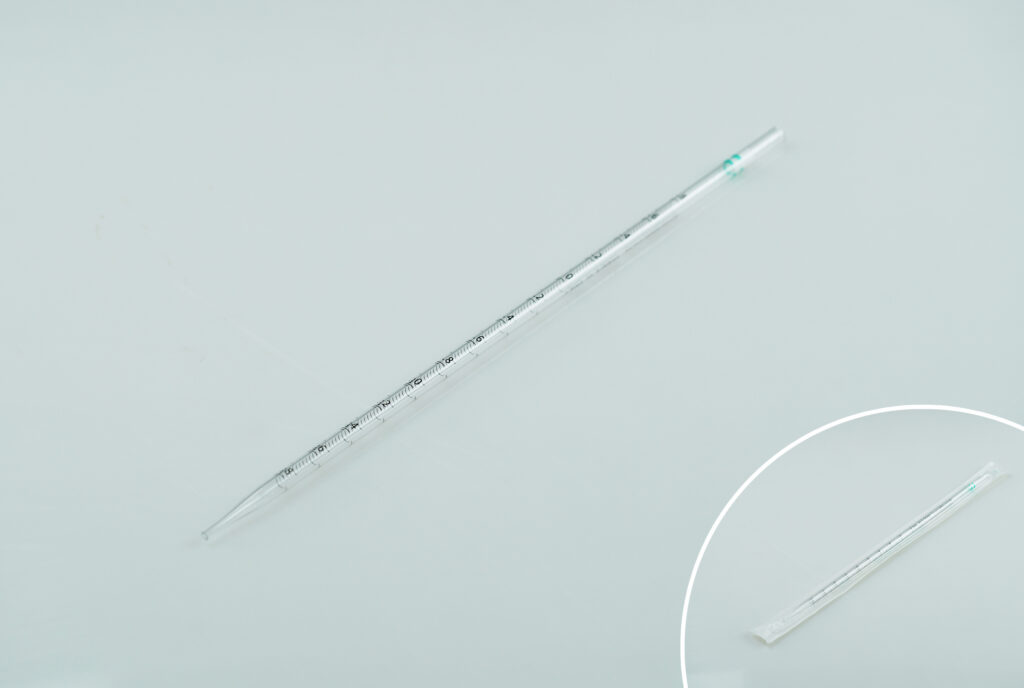
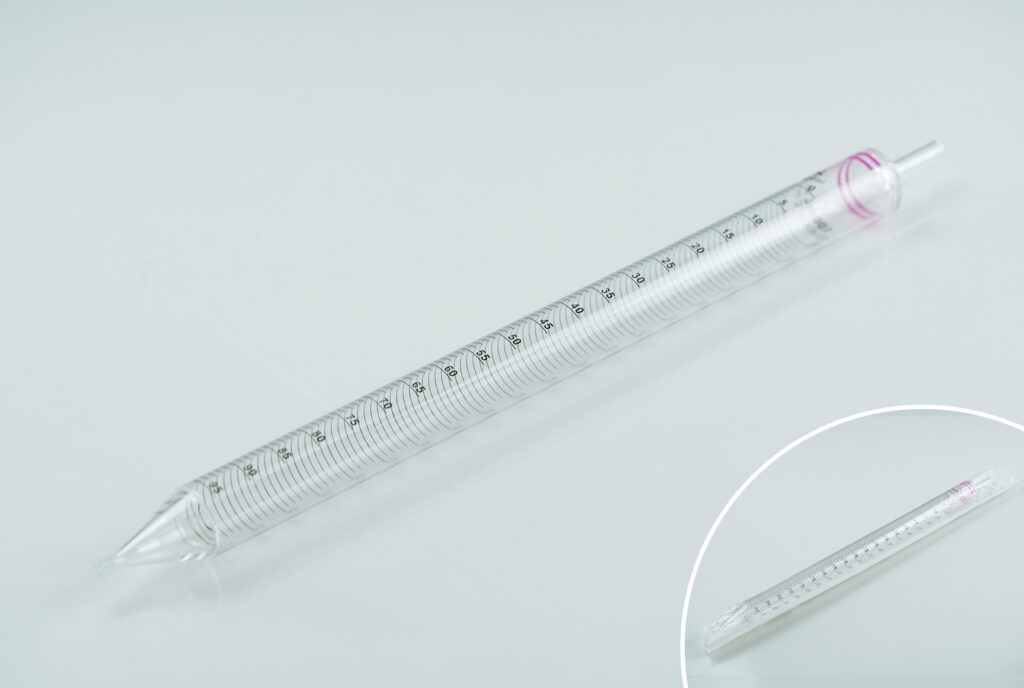
Choosing between serological pipette sizes is not simply a matter of selecting the largest capacity available. The right size should match the liquid volume you transfer most often, the degree of control required and the number of repeated transfers in your workflow. Using a pipette that is too large for a small volume can make reading and control more difficult, while using a small pipette repeatedly for a large transfer can add unnecessary handling steps.
This guide compares common 1, 2, 5, 10, 25 and 50 mL options for cell culture, media preparation and routine laboratory liquid handling. For general operating techniques, see our guide to using serological pipettes.
Serological pipette sizes at a glance
Size
Typical use
Buying consideration
1 mL
Small additions and fine volume changes
Best when small-volume control matters
2 mL
Aliquoting and small culture vessels
A practical step up from 1 mL
5 mL
Routine reagent and media transfer
Useful general-purpose small size
10 mL
Common cell-culture transfers
Balances capacity and handling
25 mL
Larger flasks and media preparation
Reduces repeated aspirations
50 mL
Higher-volume transfer
Efficient when the target volume is large
When to choose 1 mL or 2 mL
A 1 mL or 2 mL serological pipette is suited to workflows where the transferred quantity is small and the operator needs a clearer view of incremental volume changes. These sizes can be useful for adding supplements, dividing reagents into small aliquots or working with smaller culture vessels.
Choose 1 mL when your routine transfer is close to 1 mL and smaller graduations are more useful than extra capacity. Choose 2 mL when the workflow sometimes exceeds 1 mL or when a little more flexibility can reduce repeated filling.
When 5 mL or 10 mL is the practical choice
For many routine laboratory tasks, 5 mL and 10 mL sizes provide a useful middle ground. They offer more capacity than small-volume pipettes without the bulk of a 25 mL or 50 mL format. A 5 mL pipette works well when most transfers remain below 5 mL. A 10 mL pipette is often more efficient for repeated media additions, washing steps and transfers between common cell-culture vessels.
If your target volume sits between two capacities, consider how often you need the upper part of the range. Regularly refilling a 5 mL pipette to complete a 7–10 mL transfer usually makes the 10 mL size the more efficient choice.
When to select 25 mL or 50 mL
Large serological pipettes are designed for workflows where fewer aspirations and faster bulk transfer are more important than fine small-volume control. A 25 mL size is suitable for many media-preparation and larger-vessel tasks. A 50 mL pipette becomes useful when substantial volumes are moved routinely and reducing repeated handling can improve workflow efficiency.
Do not choose a 50 mL pipette only because it holds more liquid. If most transfers are 10–20 mL, a 25 mL option may be easier to handle and better matched to the actual task.
A simple purchasing checklist
Map your real transfer volumes: review the quantities used most often rather than buying by maximum capacity alone.
Limit repeated filling: choose a size that usually completes the transfer in one aspiration where practical.
Keep more than one size: laboratories handling varied volumes often benefit from a small, medium and large option.
Check packaging: individually wrapped pipettes support workflows where protected single-unit access is important.
Confirm equipment fit: verify compatibility with your pipette controller and laboratory procedure before ordering.
Explore NEST serological pipettes
NEST offers individually paper-plastic wrapped serological pipettes in multiple capacities for laboratory liquid transfer. Review the available sizes and product specifications on the product page, or contact our team for help matching an option to your workflow and purchasing requirements.
What serological pipette sizes are commonly available?
Common laboratory sizes include 1, 2, 5, 10, 25 and 50 mL. The best choice depends on the volume range used most frequently in your procedure.
Is a larger serological pipette always more efficient?
No. A larger pipette can reduce repeated aspirations for high-volume transfers, but it may be less convenient when the target volume is small. Match capacity to the normal working volume.
Should a laboratory stock several sizes?
Yes, if workflows cover a wide range of volumes. Keeping small, medium and large sizes available helps operators select a capacity appropriate to each task.
Which size is suitable for routine cell-culture work?
There is no single universal size. The 5 mL and 10 mL formats suit many routine transfers, while 1–2 mL options help with smaller additions and 25–50 mL formats support larger media transfers.
How should I compare suppliers before buying?
Compare the offered volume range, packaging format, product specifications, controller compatibility, order quantities and documentation relevant to your laboratory. Confirm important requirements with the supplier before purchase.
Share your love
This website uses cookies to improve your experience. We'll assume you're ok with this, but you can opt-out if you wish.
Read More
Cookies are small text files that can be used by websites to make a user's experience more efficient. The law states that we can store cookies on your device if they are strictly necessary for the operation of this site. For all other types of cookies we need your permission. This site uses different types of cookies. Some cookies are placed by third party services that appear on our pages.
Necessary cookies help make a website usable by enabling basic functions like page navigation and access to secure areas of the website. The website cannot function properly without these cookies.
Marketing cookies are used to track visitors across websites. The intention is to display ads that are relevant and engaging for the individual user and thereby more valuable for publishers and third party advertisers.
Preference cookies enable a website to remember information that changes the way the website behaves or looks, like your preferred language or the region that you are in.