
Free EU Shipping on Orders €200+ 🚚
Free EU Shipping on Orders €200+ 🚚
Free EU Shipping on Orders €200+ 🚚



Sterile pipette tips are an important purchasing choice for laboratories that need to control contamination. However, “sterile” is not automatically necessary for every transfer, and it does not mean the same thing as “filtered.” Choosing correctly requires matching the tip specification to the workflow, the laboratory’s SOPs and the consequences of contamination.
What does “sterile pipette tip” mean?
A sterile pipette tip is supplied in a sterile condition and packaged to protect that status until use. For buyers, the practical questions are whether sterility is stated in the product specification, whether the packaging remains intact and whether the rack or pack format suits the laboratory’s handling process.
Sterility should not be treated as a substitute for every other quality requirement. Sterile status is separate from filtration, material compatibility and claims such as RNase- or DNase-free. If a workflow requires one of these properties, check it independently in the product documentation.
When are sterile pipette tips necessary?
- When the SOP requires sterile consumables. Validated methods and controlled laboratory procedures should take priority over general purchasing advice.
- For aseptic or contamination-sensitive handling. Cell-culture work and other workflows that must limit microbial introduction commonly require sterile consumables.
- For sensitive molecular workflows. PCR, nucleic-acid preparation and low-copy-number assays may require sterile tips together with additional controls selected by the laboratory.
- When sample integrity has high operational value. If contamination could invalidate a batch, delay a project or force a repeat test, the cost of sterile tips may be justified by the reduced handling risk.
Sterile tips still need correct handling. Once a rack is opened, careless storage, contact with gloves or exposure to the work surface can compromise the benefit of sterile supply.
Sterile vs. filtered pipette tips
Sterility and filtration solve different problems. Sterility describes the condition in which the tip is supplied. A filter is a physical barrier inside the tip that helps reduce aerosol and liquid movement toward the pipette. A tip can therefore be sterile and filtered, sterile and unfiltered, or filtered without being supplied sterile.
For PCR, nucleic-acid work and other contamination-sensitive applications, laboratories may specify both properties. For routine liquid handling, only one—or neither—may be required. See our filtered vs. unfiltered pipette tips guide for a separate comparison of barrier protection.
When may non-sterile tips be appropriate?
Non-sterile tips may be suitable for general reagent preparation, training, buffer transfer or other routine tasks when the method does not require sterile consumables. The correct choice depends on the sample, downstream analysis, laboratory environment and established risk controls. Using sterile tips everywhere can add cost without improving an outcome that is not sensitive to microbial contamination.
What should buyers check before ordering?
- Volume range: Match the tip size to the pipette and intended transfer volume.
- Pipette compatibility: Confirm fit, sealing and ejection performance with the pipettes used in the laboratory.
- Sterile and filter status: Verify both specifications separately rather than assuming one includes the other.
- Packaging format: Racked tips can support organized bench handling and straightforward access, while packaging integrity remains essential.
- Required documentation: Ask for the specific product information needed by your purchasing or quality process before ordering.
Sterile racked pipette tips from NEST
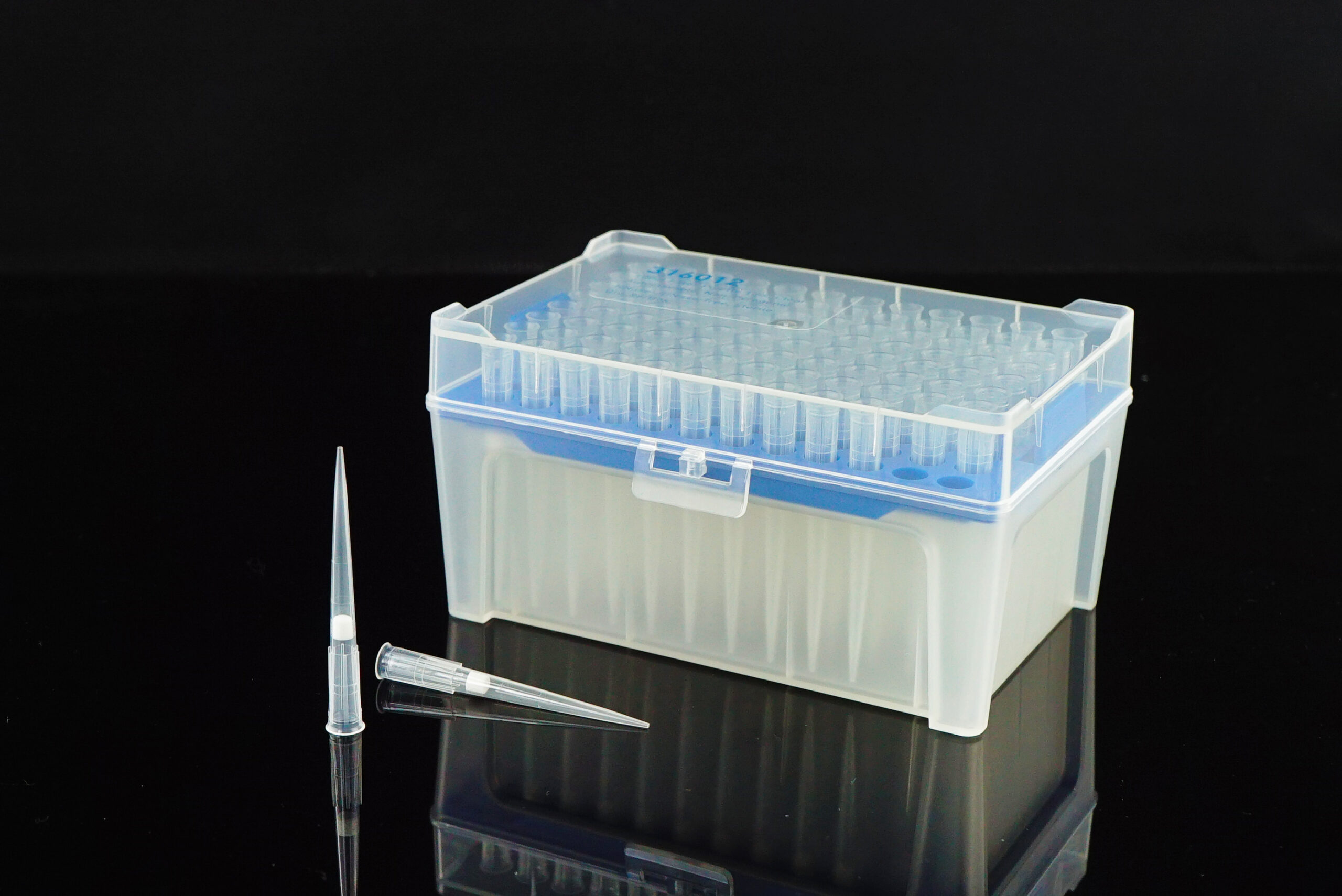
NEST offers sterile racked pipette tips in 10 µL, 200 µL and 1000 µL options. The product page lists polypropylene construction, filter configurations and broad pipette compatibility. Review the available specification and select the format that matches your pipette, volume and workflow requirements.
Frequently asked questions
Are sterile pipette tips always filtered?
No. Sterile and filtered are separate specifications. Check the product description for both before purchasing.
Are filtered pipette tips always sterile?
No. A filter provides a barrier function, but it does not confirm that the tip was supplied sterile.
Do I need sterile tips for every laboratory task?
Not necessarily. Follow your laboratory’s SOP, method requirements and contamination-risk assessment. Routine transfers may not require sterile consumables.
Can sterile tips become contaminated after opening?
Yes. Poor handling or storage can introduce contamination after the rack or package is opened. Use clean technique and follow your laboratory’s procedures.
Choose the specification your workflow actually needs
Sterile pipette tips are most valuable when the method, SOP or contamination risk clearly calls for them. Evaluate sterility, filtration, compatibility, volume and packaging as separate purchasing criteria. This keeps the specification aligned with the work instead of relying on a single label.