
Free EU Shipping on Orders €200+ 🚚
Free EU Shipping on Orders €200+ 🚚
Free EU Shipping on Orders €200+ 🚚



Choosing a pipette tip looks simple until poor fit, the wrong volume range, or an unsuitable format interrupts a workflow. The right choice should create a reliable seal, support the required liquid volume, and match the contamination controls of the application. This guide explains how to find the right pipette tip before placing a laboratory order.
Start with the pipette’s volume range
Begin with the volume you actually transfer, not only the largest number printed on the pipette. A tip should sit within the intended working range of both the pipette and the tip. Small-volume work commonly uses 10 µL tips, routine bench transfers often use 200 µL tips, and larger transfers may require 1000 µL or 1 mL pipette tips.

Using an oversized tip for very small transfers can make handling less practical. A tip that is too small cannot safely accommodate the required volume. If a protocol covers several ranges, plan the correct tip size for each pipette rather than forcing one format across every step.
Check pipette tip compatibility before ordering
Pipette tip compatibility is more than whether a tip can be pushed onto a pipette. A suitable tip should form a consistent seal, remain secure during aspiration and dispensing, and eject without excessive force. An unstable seal can introduce air leakage and inconsistent liquid handling.
Do not assume that “universal” means compatible with every pipette model. For a new brand, instrument, or tip style, confirm the pipette model and volume range with the supplier. For larger purchases, testing a sample or small pack can reduce the risk of ordering a format that does not fit the laboratory’s equipment.
Choose filtered or unfiltered pipette tips
Filtered tips include a barrier intended to help reduce aerosol transfer between the liquid and pipette. They are commonly selected for PCR, nucleic-acid work, or other contamination-sensitive procedures. Unfiltered tips may be sufficient for many routine transfers where aerosol protection is not a priority.
The choice should follow the workflow’s risk assessment rather than a blanket rule. For a detailed comparison, see our guide to filtered vs. unfiltered pipette tips.
Decide whether sterile tips are necessary
Sterile pipette tips are useful when the procedure requires controlled handling of sensitive samples or when the laboratory’s SOP specifies sterile consumables. However, sterile and filtered describe different characteristics: a sterile tip is supplied with a defined sterility status, while a filter is a physical barrier inside the tip. One does not automatically guarantee the other.
Before buying, check whether the required configuration is sterile, filtered, or both. Also confirm the package remains appropriate for the way tips will be opened and used in the laboratory.
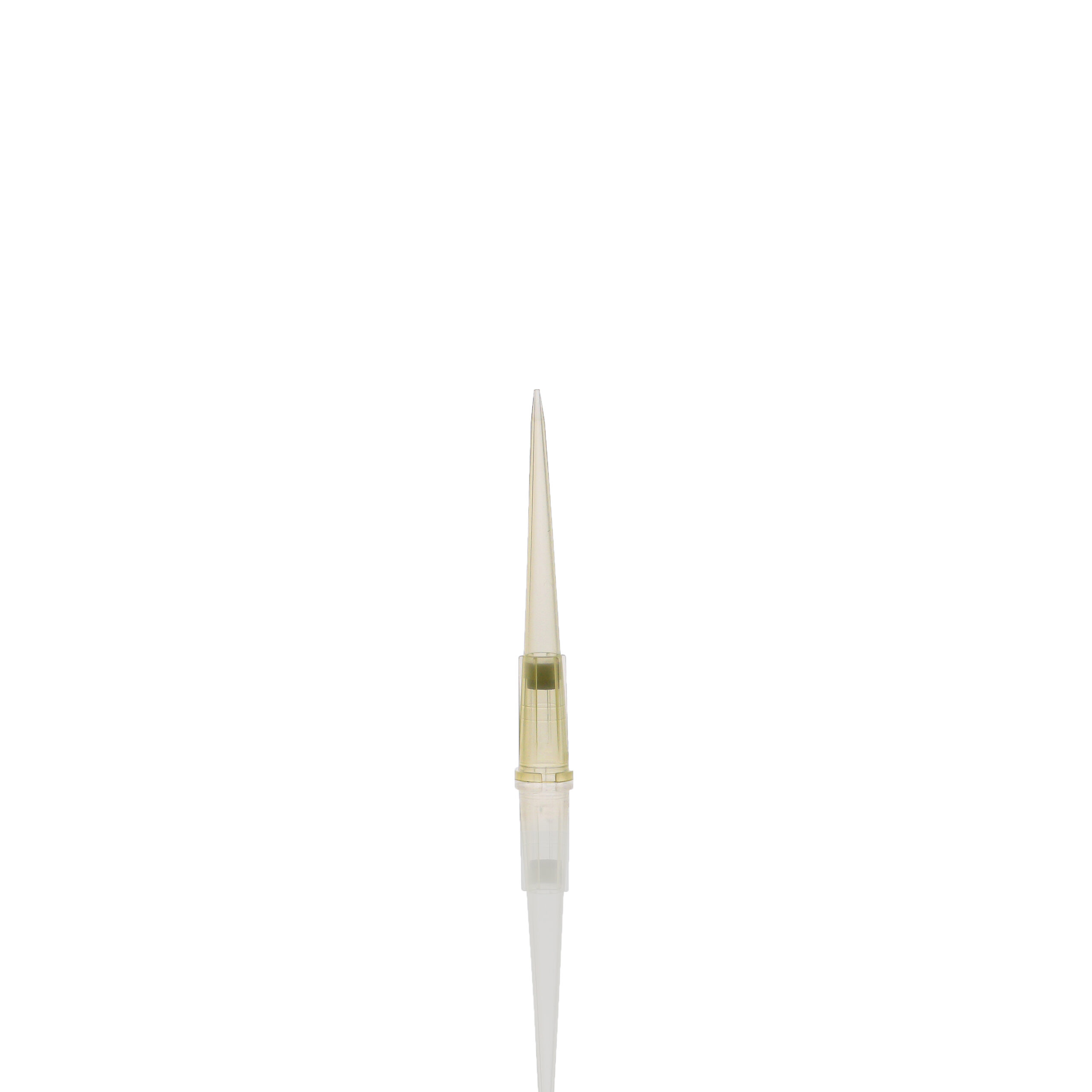
Consider tip length and packaging
Standard-length tips work for many everyday transfers. Extra-long tips can help when reaching into deeper tubes or vessels while keeping the pipette shaft farther from the container. Packaging also affects workflow: racked tips support convenient loading and organized handling, while other formats may suit high-volume purchasing or laboratory-specific refill systems.
A practical buying checklist
- Confirm the pipette brand, model, and volume range.
- Match the tip capacity to the transfer volume.
- Choose filtered, unfiltered, sterile, or combined formats according to the protocol.
- Check whether standard or extra-long tips are more suitable.
- Review rack and case quantities before ordering.
- Test compatibility before committing to a large order.
NEST offers sterile racked pipette tips in 10 µL, 200 µL, and 1000 µL options. Review the product configuration and confirm compatibility with your pipette before purchase.
Frequently asked questions
Are pipette tips universal?
Some tips are designed for broad compatibility, but no label should replace a fit check. Confirm the pipette model, volume range, seal quality, and ejection performance before a large order.
Which pipette tip size is used for 1 mL?
A 1000 µL tip is commonly used for transfers up to 1 mL when paired with a compatible pipette. Always follow the pipette and tip specifications.
Do sterile pipette tips always have filters?
No. Sterility and filtration are separate product characteristics. Verify both attributes in the product description or specification before ordering.
How can buyers confirm compatibility?
Provide the supplier with the pipette brand, model, and volume range. When possible, evaluate a sample for fit, sealing, aspiration, dispensing, and ejection.
Find the right pipette tips for your workflow
A good purchasing decision starts with compatibility and application requirements, then narrows the choice by volume, filter type, sterility, length, and packaging. View NEST pipette tips or contact our team if you need help matching a configuration to your laboratory workflow.