
Free EU Shipping on Orders €200+ 🚚
Free EU Shipping on Orders €200+ 🚚
Free EU Shipping on Orders €200+ 🚚



Bulk centrifuge tubes and racked centrifuge tubes can contain the same type of tube, yet they create different costs and handling demands after delivery. The better choice depends on consumption, available space and whether tubes must be organized at the point of use.
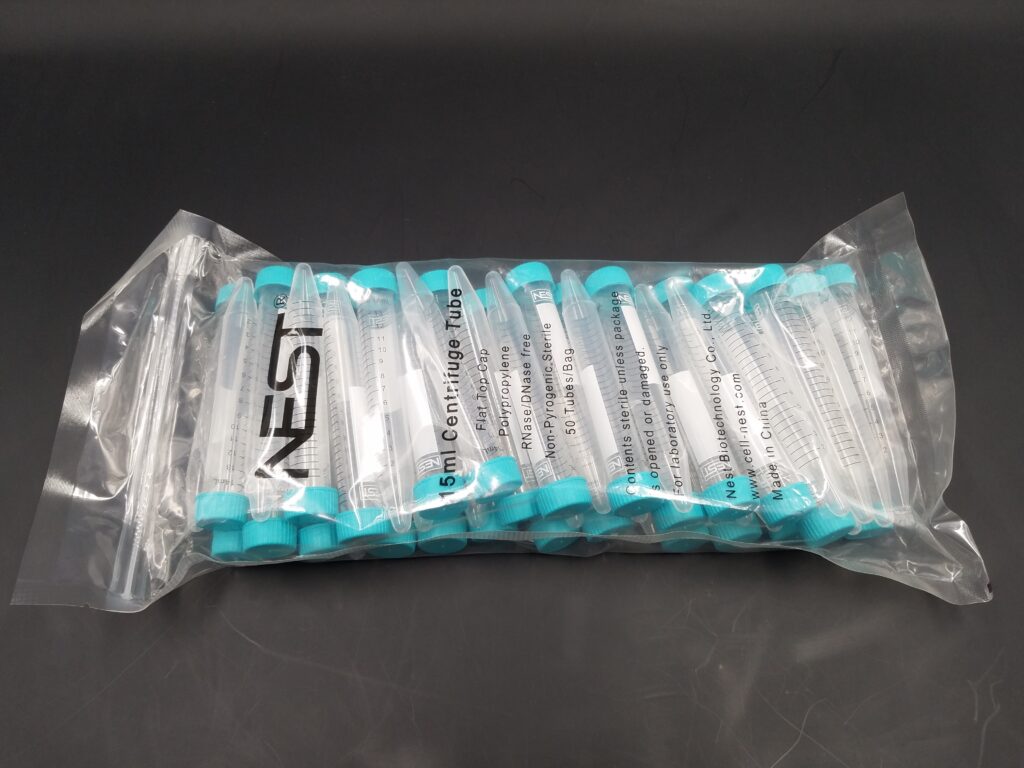
Bulk vs Racked Centrifuge Tubes at a Glance
| Buying factor | Bulk packaging | Rack packaging |
|---|---|---|
| Best fit | High-volume use and teams with racks | Organized, ready-to-place tubes |
| Storage | Less rigid packaging; suitable storage needed after opening | Structured and stackable; racks occupy more space |
| Bench setup | Tubes may need transferring into racks | Tubes arrive arranged in a rack |
| Purchasing check | Pack quantity and availability | Rack format, tube count and case quantity |
Neither format is automatically better. Bulk packaging favors flexibility and high consumption, while rack packaging reduces preparation at the bench.
When Bulk Centrifuge Tubes Make Sense
Bulk centrifuge tubes are practical for laboratories that use large quantities and already maintain compatible racks. They can also suit centralized stockrooms supplying several departments.
Compare delivered case cost, storage footprint, rack-loading time and the risk of repeated handling. Bulk packaging may reduce rigid packaging, but unsuitable storage after opening can cancel that advantage.

- Tube consumption is predictable and relatively high.
- Compatible racks are already available.
- Opened packs can be stored in a clean, controlled way.
- Reducing rigid packaging is important to the workflow.
When Racked Centrifuge Tubes Are the Better Buy
Racked centrifuge tubes are useful when setup time and orderly presentation matter more than minimizing packaging. Staff can place the rack at a workstation without first sorting individual tubes.
Racks also simplify stock counting because missing tubes are visible. Purchasers should still account for storage space and decide how empty racks will be handled under local procedures.

- Tubes are used directly at several benches.
- Organized presentation reduces preparation time.
- Stock visibility is useful.
- The laboratory has room for full and empty racks.
Five Checks Before Ordering 15 mL or 50 mL Tubes
- Required volume. Use 15 mL tubes for smaller samples and 50 mL tubes when more working volume is needed.
- Sterile status and cleanliness claims. Match the exact SKU to the application; packaging alone does not define these specifications.
- Maximum RCF. Confirm tube and centrifuge compatibility. The currently listed NEST clear sterile 15 mL and 50 mL variants specify 12,000 × g.
- Pack and case quantity. Compare quantities with monthly consumption, not only the displayed case price.
- Current availability. The NEST shop currently lists clear sterile PS-racked variants. Ask about other configurations or volume orders.
NEST 15 mL and 50 mL Centrifuge Tube Options
NEST standard clear centrifuge tubes use a polypropylene tube and high-density polyethylene cap. Printed graduations and a marking area support routine identification.
Review specifications, pack quantities and availability on the NEST 15 mL and 50 mL centrifuge tube product page. Compare the exact SKU rather than treating “bulk” or “racked” as a complete specification.
Frequently Asked Questions
Are bulk centrifuge tubes always cheaper than racked tubes?
No. The final cost depends on case quantity, shipping, staff time, existing racks and wastage. Compare total delivered and operating cost for the exact SKUs.
Are racked centrifuge tubes always sterile?
No. Packaging format and sterile status are separate specifications. Confirm the listing, label or supporting documentation for the exact SKU.
Can empty centrifuge tube racks be reused?
Some racks may be reused for organization if their material, condition and laboratory procedures allow it. Reuse does not restore sterility, so follow applicable contamination-control procedures.
Should I buy 15 mL or 50 mL centrifuge tubes?
Choose the volume that fits the sample and rotor while leaving suitable headspace. Many laboratories stock both because they serve different preparation steps.
What information should I send when requesting a quotation?
Include tube volume, sterile status, preferred packaging, quantity, destination country and expected purchasing schedule. This helps the supplier confirm the relevant SKU, stock and delivery arrangement.
Conclusion
Bulk centrifuge tubes suit high-consumption laboratories with suitable racks and storage controls. Racked tubes are often better when quick setup, organization and stock visibility are priorities. Select the format that reduces total workflow cost rather than simply choosing the lowest displayed price.
For volume purchasing, alternative packaging or availability questions, contact NEST Scientific Shop.